Most contractors have a goldmine sitting in their invoicing software: hundreds or thousands of past customers and old leads who have never heard from them again.
Email is how you stay the contractor they remember. Not with a long newsletter nobody reads, but with short, useful emails that show up at the right time. This post covers who to email, what to send, how often, and the rules that keep you legal and out of the spam folder.
Who to email
Start with people who already know you:
- Past customers. The best list you have. They already trust you.
- Estimates that didn’t close. Many still need the work.
- Website and phone leads who gave you their email.
- Recurring and maintenance customers.
Don’t buy email lists. They hurt your deliverability, bring spam complaints and rarely turn into jobs.
Five emails worth sending
Nobody wants a newsletter. They want a reminder that saves them money. These five work for almost any trade:
- The seasonal reminder. “It’s time for your fall furnace tune-up.” Time it with our seasonal marketing calendar.
- The helpful tip. “Three signs your water heater is about to fail.” Useful and short, with a way to book.
- The recent project. Before-and-after photos from a local job, with a one-line story.
- The review and referral ask. Thank customers, ask for a Google review, and ask who else could use you. See our referral guide.
- The schedule opening. “We have two openings next week in [Town].” Great for slow weeks.
How to write emails people actually open
- Subject lines: short, specific and honest. “Your AC tune-up reminder” beats “Big news inside!!!”
- Length: under 150 words for most emails.
- One call to action: book, call or reply. Not five links.
- Sound like a person: sign it from you, not “The Team.”
- Mobile first: most people read on their phone.
How often to send
Once a month is a good starting point, plus seasonal reminders around your busy windows. Consistency matters more than volume. A monthly email for a year beats ten emails in one week and silence after.
The rules: CAN-SPAM
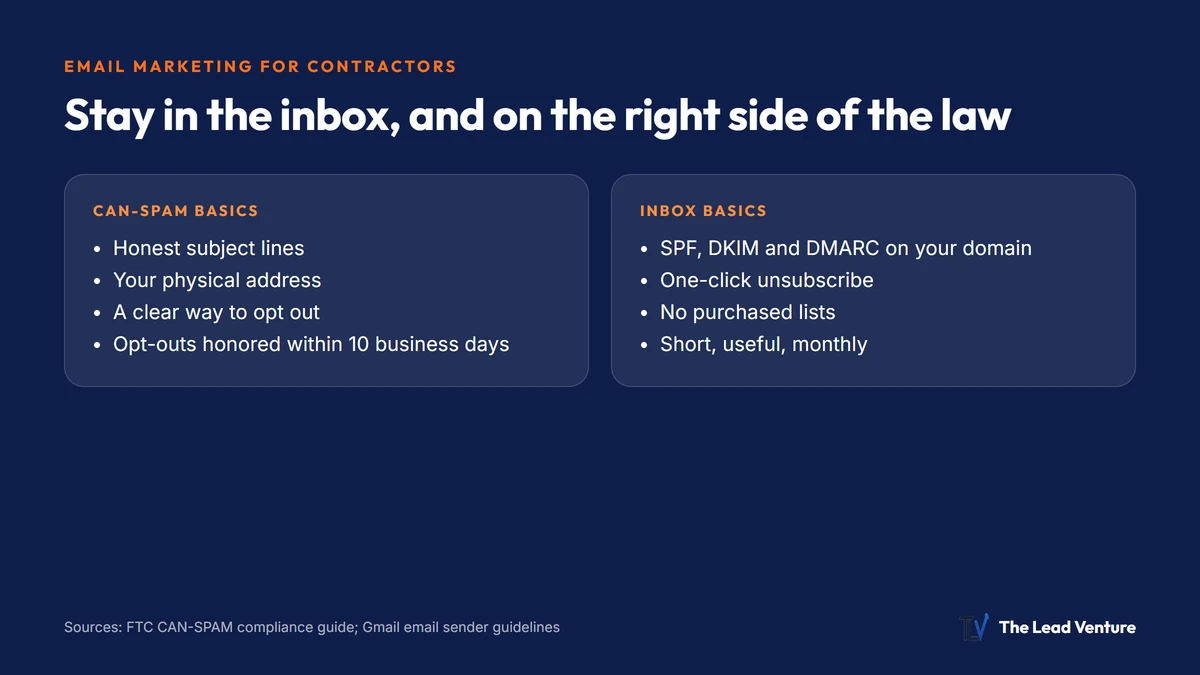
The FTC’s CAN-SPAM guidance applies to commercial email. The main requirements:
- Don’t use false or misleading header information.
- Don’t use deceptive subject lines.
- Identify the message as an ad when it is one.
- Tell recipients where you’re located: include a valid physical postal address.
- Tell recipients how to opt out, clearly.
- Honor opt-out requests within 10 business days.
- Monitor what others do on your behalf, including any agency sending for you.
The FTC says each separate email in violation can bring penalties of up to $53,088. Use an email platform that adds your address and unsubscribe link automatically.
The rules: getting into the inbox
Gmail’s sender guidelines require bulk senders (close to 5,000 messages a day to Gmail accounts) to authenticate their domain with SPF, DKIM and DMARC, and to support one-click unsubscribe on marketing emails. Even if you send less, setting these up helps your emails reach the inbox.
Ask your email provider or website team to check your domain’s SPF, DKIM and DMARC records before your first campaign.
Your email marketing checklist
- Export past customers, old estimates and leads from your software
- Remove anyone who opted out and any obviously bad addresses
- Set up SPF, DKIM and DMARC on your sending domain
- Use a platform that adds your address and unsubscribe link
- Plan one monthly email plus seasonal reminders
- Keep each email short, local and useful, with one call to action
- Track replies, bookings and revenue from each email
The bottom line
Email is the cheapest way to stay in front of people who already trust you. Send short, useful emails on a steady schedule, follow the rules, and make sure your domain is set up to reach the inbox. The Booked Solid System Full Suite plan includes newsletter follow-up and Revenue Campaigns, so your past customers hear from you every month without you writing a thing.