Most home service businesses market the same way all year, then wonder why they’re slammed in July and dead in January. The fix isn’t more marketing. It’s better timing.
The best time to market for the busy season is before it starts. This post gives you a month-by-month campaign calendar for seven trades, campaign ideas for each season, and message examples you can send to past customers.
The calendar at a glance
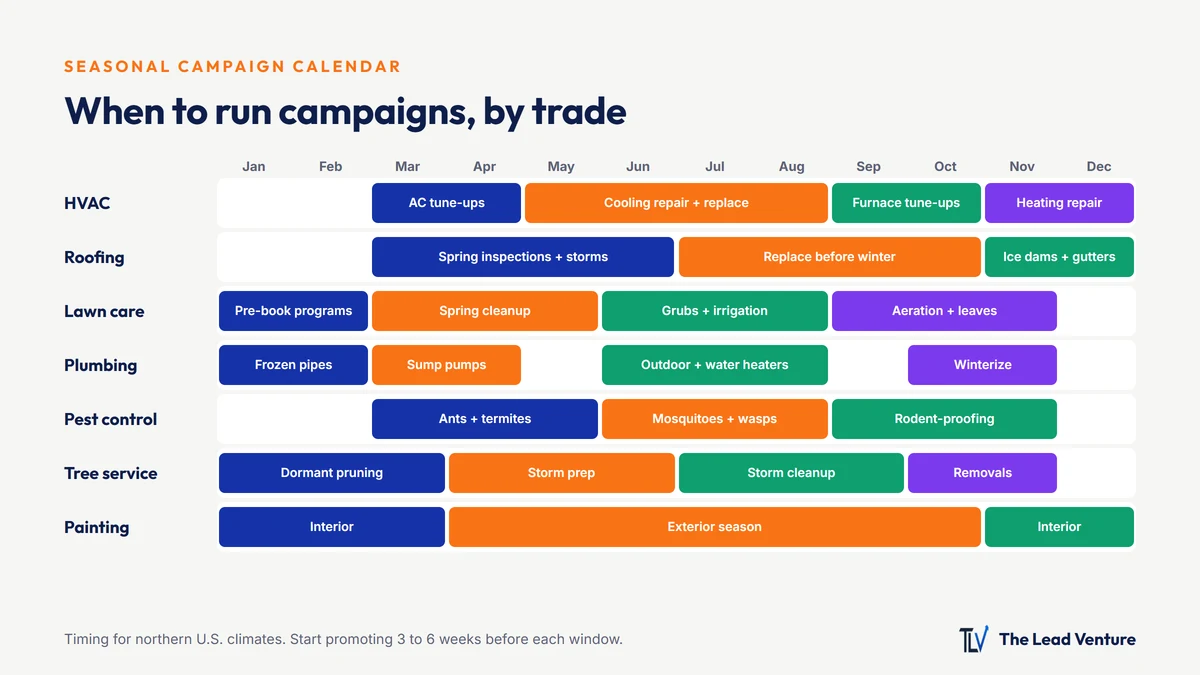
The chart shows when demand peaks for each trade in a typical northern U.S. climate. Start promoting each campaign three to six weeks before its window opens.
Even ENERGY STAR recommends checking cooling systems in the spring and heating systems in the fall, before contractors get busy. That advice works as your HVAC marketing calendar too.
Campaign ideas by trade
HVAC
- March to April: AC tune-up campaign before the first heat wave.
- May to August: Repair and replacement. Push financing options and fast response.
- September to October: Furnace tune-ups and safety checks.
- November to February: Heating repair, plus selling maintenance plans for next year.
See the full HVAC growth playbook.
Roofing
- March to June: Spring inspections and storm damage checks.
- July to October: “Replace before winter” campaigns. Book the work while the weather holds.
- November to February: Ice dam and gutter work, and financing for spring projects.
See the roofing playbook and our guide to storm season lead generation.
Lawn care and landscaping
- January to February: Pre-book annual programs with an early sign-up offer.
- March to May: Spring cleanup, first treatments and mulch.
- June to August: Grub control, irrigation checks and summer maintenance.
- September to November: Aeration, overseeding and leaf cleanup.
See the lawn care playbook and landscaping playbook.
Plumbing
- January to February: Frozen and burst pipe response.
- March to April: Sump pump checks before spring rains.
- June to August: Outdoor plumbing and water heater replacement.
- October to November: Winterizing outdoor spigots and water heater flushes.
See the plumbing playbook.
Pest control
- March to May: Ants and termite swarm season.
- June to August: Mosquitoes, wasps and summer pests.
- September to November: Rodent-proofing before they move indoors.
See the pest control playbook.
Tree service
- January to March: Dormant-season pruning.
- April to June: Storm prep and hazard tree inspections.
- July to September: Storm cleanup and emergency response.
- October to November: Removals before winter storms.
See the tree service playbook.
Painting
- April to October: Exterior season. Book it early, since good weather fills up fast.
- November to March: Interior projects, and pre-booking spring exteriors.
See the painting playbook.
Use slow season to book busy season
Slow season is when you book the busy season. When the phone gets quiet:
- Sell maintenance plans. Recurring visits smooth out your revenue and keep customers from shopping around.
- Offer early-bird booking for spring and summer work, with a small incentive for committing now.
- Reach out to past customers. Our reactivation campaign templates work well here.
- Collect reviews from everyone you served in the busy season. Here are review request templates.
- Update your Google Business Profile with new photos and seasonal services.
Seasonal message examples
Keep them short and timely. Only text people who gave you permission, and include an opt-out.
Spring (HVAC): “Hi [Name], it’s [Business]. Hot weather is coming. Want to get your AC tuned up before the rush? We have openings next week. Reply STOP to opt out.”
Fall (lawn care): “Hi [Name], it’s [Business]. Fall is the best time to aerate and overseed. Want us to add it to your next visit? Reply STOP to opt out.”
Winter (plumbing): “Hi [Name], it’s [Business]. A cold snap is coming. If you’d like your outdoor spigots winterized, reply and we’ll get you scheduled. Reply STOP to opt out.”
Your seasonal planning checklist
- Mark your busy and slow months on a calendar
- Plan one campaign for each window, three to six weeks ahead
- Write the past-customer message for each campaign
- Update your website and Google profile for the season
- Set aside budget for your peak months
- Use slow months for maintenance plans, reviews and pre-booking
The bottom line
Timing beats volume. Plan each campaign before demand peaks, use slow months to book the busy ones, and keep your past customers in the loop. The Booked Solid System includes pre-built seasonal campaigns for your trade through Revenue Campaigns, so they go out on time without you remembering.