“Respond in five minutes or lose the lead” gets repeated in every sales training and marketing pitch. Most people quoting it have never read where it came from.
This post goes back to the original research, shows exactly what each study found, and explains what it means for a contractor whose phone rings while they’re on a job. If you want the practical playbook instead, read speed to lead: why the first 5 minutes matter.
The 100x statistic: the Lead Response Management Study (2007)
The most quoted speed to lead numbers come from the Lead Response Management Study by InsideSales.com and Dr. James Oldroyd, often called “the MIT study.” It looked at when calls were made to new leads and how often those calls reached and qualified the person.
Its key findings:
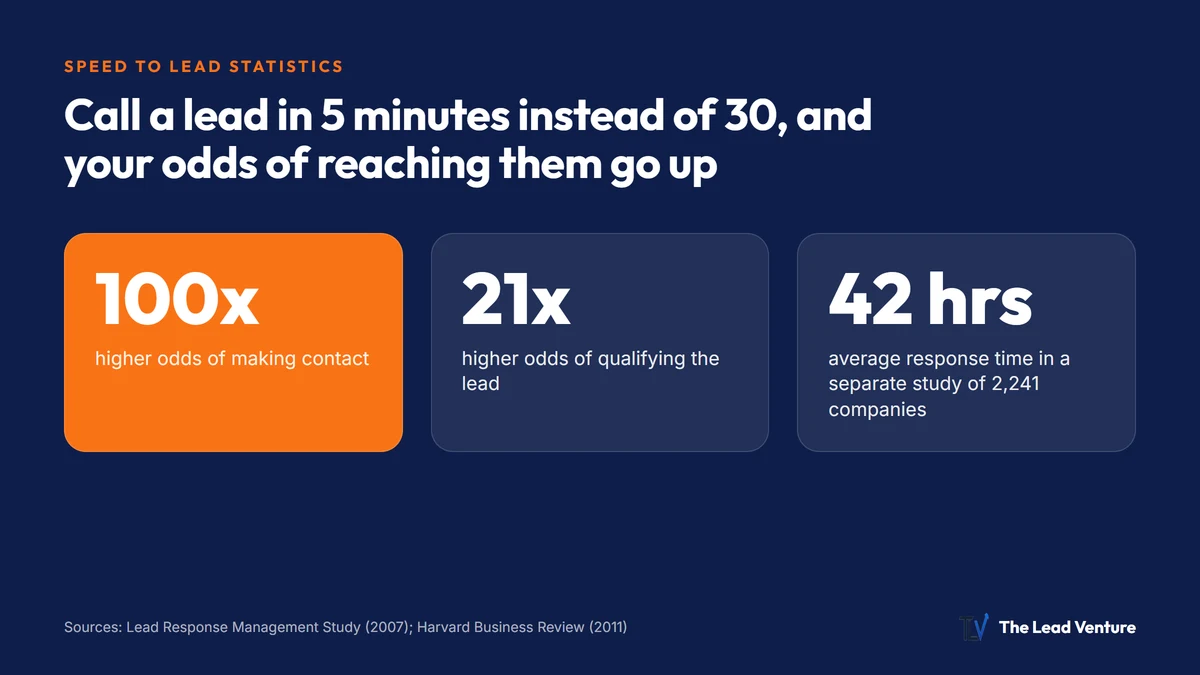
- The odds of contacting a lead were 100 times higher when called within 5 minutes versus 30 minutes.
- The odds of qualifying a lead were 21 times higher within 5 minutes versus 30 minutes.
- The odds of making contact dropped by over 10 times in the first hour.
- Wednesdays and Thursdays were the best days to reach leads, and 4 to 6pm was the best time to make contact.
The lesson: the first few minutes after someone reaches out are worth more than the next several hours combined.
The response gap: Harvard Business Review (2011)
A separate study, published in Harvard Business Review as “The Short Life of Online Sales Leads,” tested how fast 2,241 U.S. companies responded to a web lead.
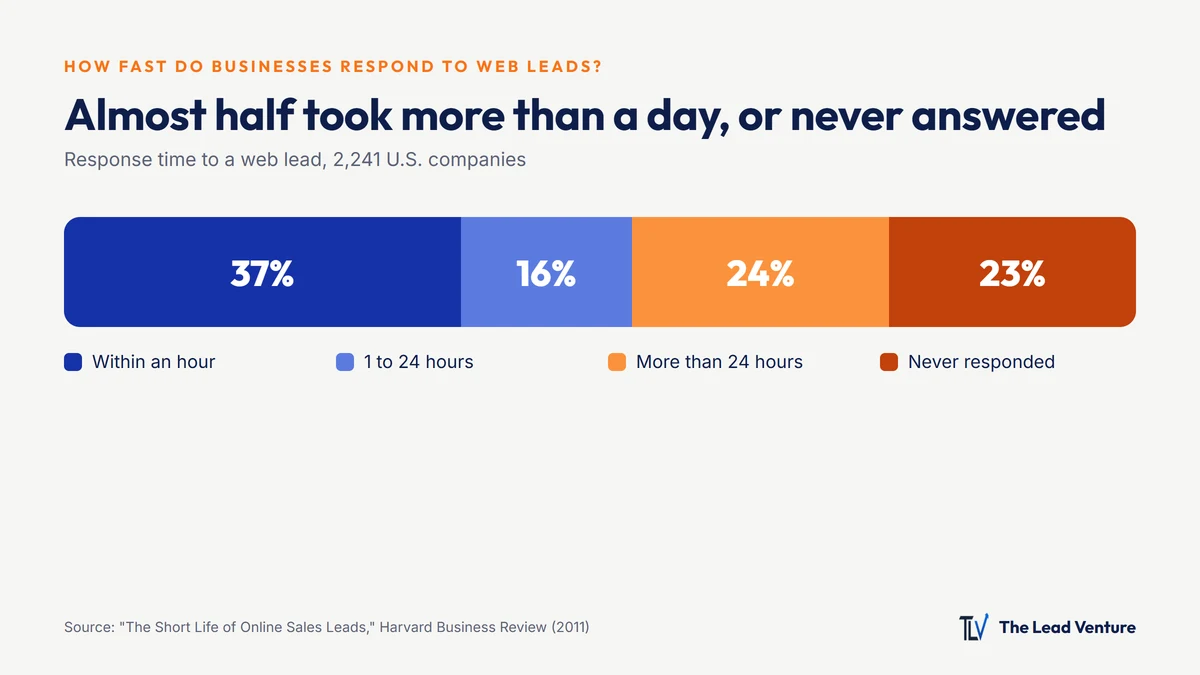
- 37% responded within an hour.
- 16% responded within 1 to 24 hours.
- 24% took more than 24 hours.
- 23% never responded at all.
- Among companies that did respond within 30 days, the average response time was 42 hours.
It also found that companies that tried to contact leads within an hour were nearly seven times as likely to qualify them as companies that waited even an hour longer, and more than 60 times as likely as companies that waited 24 hours or longer.
What these numbers mean for a home service business
Most businesses don’t lose leads to competitors. They lose them to the clock. A homeowner with a leaking pipe or a broken AC isn’t waiting 42 hours. They call the next company on the list.
The good news is in the same data. The average business takes nearly two days, and almost a quarter never respond. The fastest way to beat the average is to answer. You don’t need to be bigger or cheaper. You need to be first.
We’ve seen the same pattern with our own clients. In one case, we took a client’s lead response time from 8+ hours to under 30 seconds with automatic replies and alerts.
A word of caution about these statistics
Both studies are more than a decade old and covered many industries, not just home services. Buying habits have changed since then; more people text instead of call. Treat the exact multiples as directional, not as a promise.
What hasn’t changed is the direction. Faster responses reach more people and book more jobs. Every study since has pointed the same way.
How to get your response time under five minutes
- Turn on missed-call text-back so every unanswered call gets a text in seconds
- Send an instant reply to every web form and Facebook lead
- Get new-lead alerts on your phone, not just your email
- Set a rule: every lead gets a real response within five minutes during business hours
- Use missed-call text templates so replies sound like a person
- Follow up on anyone who doesn’t reply, then follow up after the estimate
- Check your response time every month
Use the calculator in this post to see what missed and slow-answered calls are costing you.
The bottom line
The research is old, but the lesson keeps holding up: the business that answers first usually gets the conversation, and the conversation is how you get the job. The Booked Solid System is built around responding in seconds, even when you’re on a roof.