 Jonathan Blake
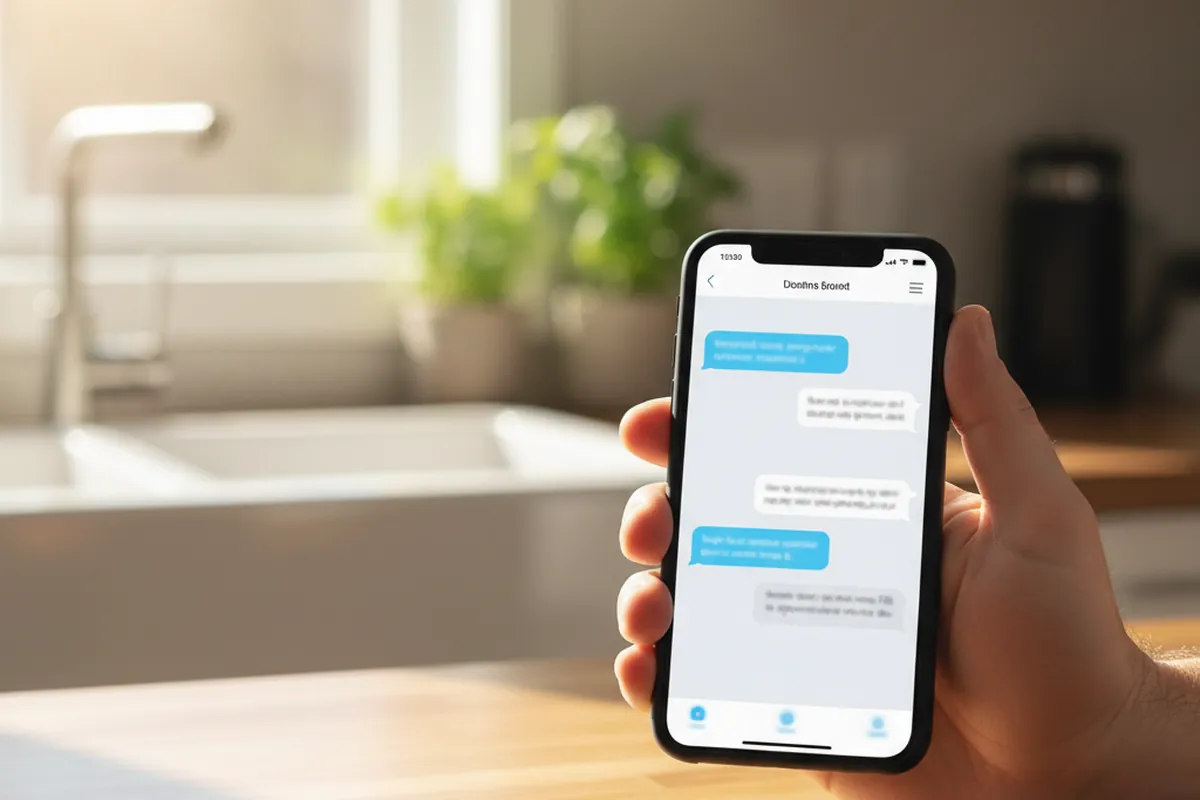
You’re on a ladder, under a house, or sitting at a kitchen table closing a deal. The phone rings. You can’t pick up. By the time you call back 40 minutes later, the homeowner already booked someone else.
Missed call text back fixes that one moment. The second a call goes unanswered, the caller gets a text from your business. This guide explains what it is, how it works, what it costs, the texting rules you need to know, and how to set it up so it actually books jobs.
What is missed call text back?
Missed call text back is an automation that sends a text message to anyone whose call you don’t answer. It goes out within seconds, from your business number, and says something like:
“Hi, this is Mike with Mike’s Roofing. Sorry we missed your call, we’re on a job. What can we help you with?”
The caller can reply right there. Now you have a conversation going instead of a voicemail you’ll listen to tonight, if they even left one.
It’s not an answering service and it’s not a robot that talks on the phone. It’s just a fast, automatic first reply. That’s the whole job, and it’s a big one.
How does missed call text back work, step by step?
Here’s what happens behind the scenes in most systems:
- A homeowner calls your business number. That’s the number on your truck, your Google Business Profile and your website.
- The call rings and nobody answers. You’re busy, it’s after hours, or you’re on another call. The system doesn’t care why.
- The phone system flags it as missed. Your number either lives inside the platform or forwards to it, so the system can see the call ended without being answered.
- A text goes out within seconds. It comes from the same number they just called, so they know who it is.
- The caller replies by text. They tell you what they need: a leak, a quote, a tree on the garage.
- You get an alert. The reply lands in an app on your phone, and the caller’s number is saved as a contact so nobody falls through the cracks.
- A real person takes over. You or your office reply, call back, and book the job.
Steps 1 through 6 run on their own. Step 7 is on you, and it’s where most of the money is made or lost.
Why does it matter so much?
Because most people who hit voicemail don’t leave a message. They just hang up and call the next company on the list.
An older Moneypenny study of small businesses (2016) found something similar: 69% of callers who reached voicemail hung up without leaving a message. Different years, different samples, same story. If you’re counting on voicemail to catch your leads, you’re losing most of them.
Speed matters just as much. The 2007 Lead Response Management Study found the odds of reaching a lead were about 100 times higher when a business responded within 5 minutes instead of 30. We break that research down in Speed to Lead: Why the First 5 Minutes Decide Who Gets the Job.
My rule is simple: aim to reply in under a minute. After 2 to 5 minutes, a lot of those leads have already called someone else. I started a tree service in 2015, and since then I’ve knocked on more than 25,000 doors and brought in over 1,000 leads. That’s a lot of conversations with homeowners, and the ones who are ready to buy don’t wait around. A missed call isn’t a lost lead. A missed call nobody answers is.
What should the first text say?
Keep it short, human and easy to answer. A good first text has:
- Your business name (and your first name if you can)
- That you saw their call, so they don’t think you ignored them
- One easy question, like “What can we help you with?”
- When you’ll follow up, if you can promise it honestly
- Opt-out language where your provider or carrier requires it
The goal of the first text is one reply, not a sale. We wrote out word-for-word versions for business hours, after hours, weekends and emergency trades, plus what to say after they reply, in Missed Call Text-Back Templates for Contractors. Grab those instead of writing from scratch.
What are the texting rules? (A2P 10DLC and consent basics)
This is the part most contractors skip, and it’s why their texts quietly never arrive.
A2P 10DLC registration
If you text customers from a regular 10-digit business number through software, US carriers expect you to register. This is called A2P 10DLC (application-to-person, 10-digit long code). You register your business (the “brand”) and what you’ll text about (the “campaign”).
- Unregistered texts often get filtered or blocked. Your missed-call text might never reach the caller, and you’d never know.
- There are usually small one-time and monthly fees. These come from The Campaign Registry and the carriers, and many software providers pass them through. They’re typically a few dollars to around $50 one-time, plus small monthly campaign fees, as of late 2026. Check current fees with your provider.
- Approval can take days or weeks, and rejections are common when your website is missing a privacy policy or SMS terms. We helped one business get approved after four rejections. You can read how in our A2P approval case study.
Consent and opt-outs
Texting someone back right after they called you about a service is generally treated as answering their inquiry. That’s different from marketing texts. A few basics:
- Keep the missed-call text about why they called. Coupons and promotions belong in campaigns sent to people who gave marketing consent.
- Honor STOP immediately. If someone texts STOP, QUIT or similar, they’re out. FCC rules say people can revoke consent by any reasonable means.
- Don’t add callers to a marketing list automatically unless you have the consent that kind of texting needs.
- Send at reasonable hours for anything beyond the immediate reply.
What are your options for missed call text back?
There are four main ways contractors get this feature. None is “best” for everyone. It depends on what else you need the tool to do.
| Option | What it is | Typical cost (as of late 2026, check current pricing) | Good fit for |
|---|---|---|---|
| Business phone app (e.g. Quo) | A VoIP phone system with auto-replies for missed calls | Quo lists plans from about $15 to $35 per user a month, plus texting fees | Solo owners who mainly want a better phone line |
| All-in-one marketing platform (e.g. GoHighLevel) | CRM, text-back, follow-up, reviews and booking in one place | Typically about $97 to $497 a month flat, plus usage fees for texts and calls | Owners who want text-back plus automatic follow-up and reviews |
| Review and messaging platform (e.g. Podium) | Messaging inbox, reviews and payments, with phone add-ons | Reported at about $399 to $599 a month on annual contracts, with phone add-ons extra | Multi-location shops focused on reviews and messaging |
| Field service software or phone-system features | Some job software and phone providers offer auto-replies or add-ons | Varies by plan and add-on | Shops that want to stay inside one tool they already use |
Business phone apps
Apps like Quo give you a business number on your cell with auto-replies for missed calls, after-hours messages and voicemails. They’re simple and affordable.
Business phone apps
Pros
- Low cost per user
- Quick to set up
- Good calling and texting on your cell
Cons
- Usually just one auto-reply, not a full follow-up sequence
- Limited pipeline and marketing features
- Review requests and follow-up may need other tools
All-in-one platforms like GoHighLevel
GoHighLevel is a marketing and follow-up platform. Missed call text back is one piece of it, alongside a CRM, follow-up texts and emails, review requests, booking calendars and websites. It has no dispatch board and doesn’t track parts or inventory, so it’s not a replacement for job software. Many shops run it next to Jobber, Housecall Pro or ServiceTitan. We compared that setup in ServiceTitan vs. a HighLevel-Based Platform.
Full disclosure: The Lead Venture is built on GoHighLevel. It’s one option, not the only one.
All-in-one platforms
Pros
- Text-back plus automatic follow-up until the lead books or says no
- Review requests and booking in the same place
- Flat monthly pricing, no per-tech charge
Cons
- More to set up than a simple phone app
- No dispatch or inventory
- Texting and calling usage fees on top of the plan
Podium and similar platforms
Podium is known for its messaging inbox and review tools. It’s a polished product, but it’s priced for bigger operations. Plans are reported at about $399 and $599 a month on 12-month contracts, with phone features as an add-on.
Field service software and your phone provider
Some field service tools and business phone providers offer auto-replies or text-back as a built-in feature or add-on, and some depend on your plan. Ask your current provider before you buy something new. If what you already pay for covers it, start there.
How do you set up missed call text back? (Checklist)
Whatever tool you pick, the setup steps are about the same:
- Decide whether to port your number in or forward unanswered calls to the platform
- Register your business texting (A2P 10DLC) and wait for approval before you rely on it
- Add a privacy policy and SMS terms to your website (carriers check)
- Write separate texts for business hours, after hours and weekends
- Add an emergency path if your trade handles emergencies
- Make sure the text comes from the same number they called
- Turn on mobile alerts for replies so you can answer in minutes
- Set up a follow-up for people who don’t reply
- Test it: have a friend call, hang up, and time how long until they get the text
- Check your number and business info match everywhere online
That last one matters more than it sounds. Your name, address and phone number (NAP) should be exactly the same on your Google Business Profile, website, Facebook, Yelp and every directory. If an old number is floating around online, those calls never hit your text-back at all. Our Local SEO for Contractors checklist walks through cleaning that up.
What are the most common mistakes?
- Skipping registration. Texts get filtered and you think the tool is broken.
- Sounding like a robot. “Your call is important to us” gets ignored. Write like you’d text a customer yourself.
- Asking for everything at once. Name, address, service, time? That’s a form. Ask one question.
- Nobody watching the replies. A reply that sits for three hours is a lost job.
- Stopping after one message. Follow up with every lead more than once. Many people reply to the second or third message, not the first.
- Turning it into an ad. Keep the first text about their call, not your spring special.
- Forgetting to call back. The text doesn’t close the job. It keeps the door open long enough for you to walk through it.
What happens after you book the job?
Missed call text back gets you the conversation. What you do after the job is what keeps the phone ringing.
When the work is done, ask for a review as a no-pressure offer: “If you were happy with the work, would you mind leaving us a quick Google review? No worries if not.” Never offer anything in exchange for a review. Our Google review request text templates have wording you can copy.
And ask for introductions, not referrals. At the sale, preframe it: “Most of our customers come from introductions. Once we’re done, would you be against introducing me to a friend or neighbor who needs this? We’ll give them a free estimate.” Once you’ve built rapport, the joke works too: “Do you hate me or do you hate your friends? Why haven’t you introduced me to someone yet?”
Quick wins
Want leads this month? Start here
Build the foundation first. A good website, local SEO and citations, plus every profile you can claim: Google, social media, search engines and directories. Keep your NAP (business name, address and phone number) exactly the same on your website and every listing. Verify your site in Google Search Console and Bing Webmaster Tools, and claim Bing Places for Business. The more digital real estate you own, the farther everything below takes you.
Hit up past customers
Send everyone you've worked for a real offer. They already trust you, so it's the fastest money on the board.
Do cold outreach
Call, text (with consent), email or walk in to the people and businesses who buy what you sell.
Run ads
Put a simple offer in front of homeowners in your service area this week.
Post content
Before-and-after photos, short videos and quick tips on your Google profile and social pages.
Partner with businesses that own your customers
Adjacent companies already serve the people you want. When they recommend you, you borrow their authority and trust. Co-market, swap leads or partner on lists (and follow the consent rules).
Answer every lead in under a minute
The faster you reply, the more you close. Wait 2 to 5 minutes and many leads have already called someone else.
Work every job's neighborhood
- Canvass the neighborhood around every job site. Knock on the doors on both sides and across the street.
- Leave a door hanger at every house you don't catch at home.
- Drop a handwritten note or card at the neighbors' doors: sorry for the noise and the trucks, plus an offer for a free inspection or quote.
- Put a yard sign in front of every job, and at the entrance of neighborhoods where you've done work (with permission).
Ask for introductions, not referrals
"Do you know anyone who needs…?" gets a polite "I'll keep you in mind." Asking for an introduction to a specific person gets names. Set it up at the sale, before the work starts:
"Most of our customers come from introductions, about [your real number, like 80 to 90] percent. If we knock it out of the park for you, would you be against introducing me to anyone you know who might need the same kind of work? We'll give them a free estimate."
Then follow up after the job. If you've built real rapport with the customer, a little humor works:
"So do you hate me, or do you hate your friends? Why haven't you left a review or introduced me to someone who needs the same kind of work yet?"
Only joke like that with customers you know well. With everyone else, keep it simple and thank them either way.
The bottom line
Missed call text back is one of the cheapest, simplest fixes in a home service business. Most callers won’t leave a voicemail, and the ones you don’t answer fast often call someone else. A text in the first few seconds keeps them talking to you.
Pick the tool that fits what else you need: a phone app if you just want auto-replies, an all-in-one platform if you also want follow-up and reviews, or what your current software already includes. Register your texting, keep it human, and have a real person follow up fast. Results vary by trade, market and how quickly you respond.
If you’d rather have it set up for you, our Missed Call Text-Back texts every missed caller within seconds, 24/7, and puts the conversation in your phone so you can book from the truck. Use the calculator above to see what your missed calls may be costing you.