 Jonathan Blake
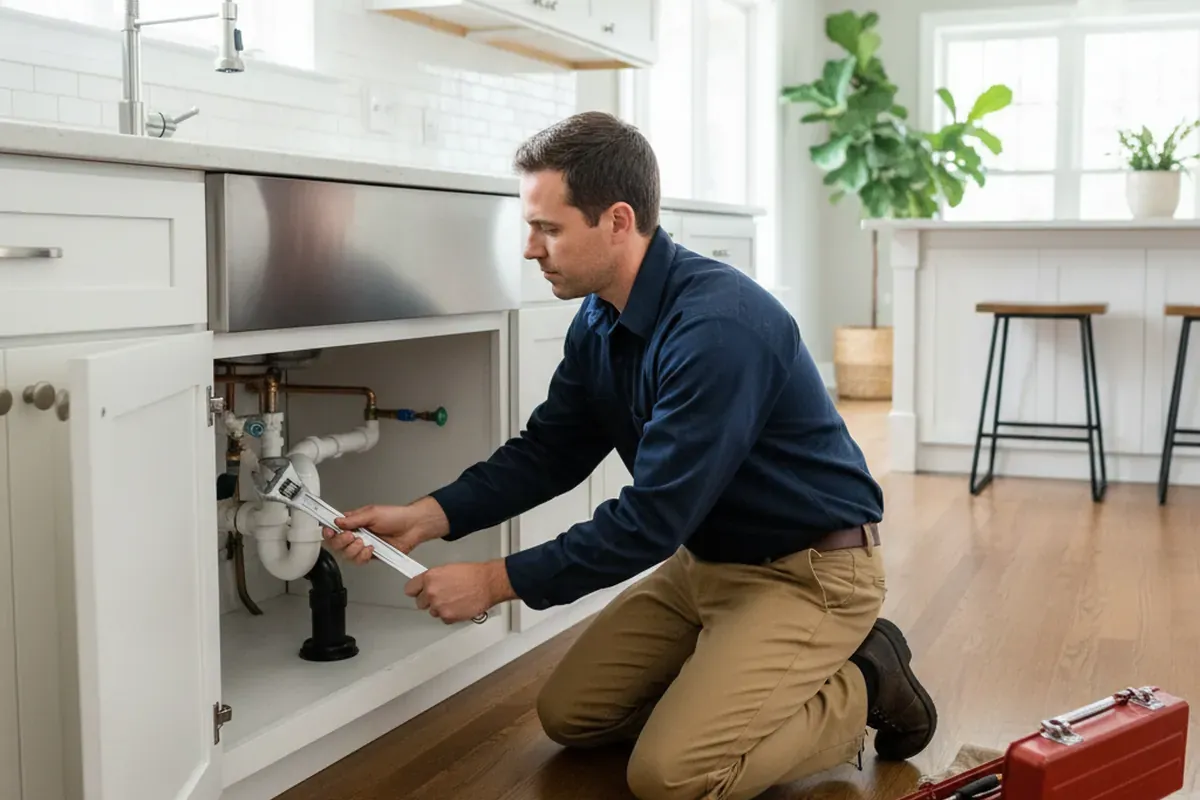
When a pipe bursts, nobody compares five plumbers. They call the first one they find and hire the first one who answers. That’s why plumbing marketing is different from most trades: speed and visibility beat clever ads.
Here are nine plumbing marketing ideas, in roughly the order they pay off. If you only have time for three, do the first three. Not sure which one your business needs most? The 2-minute Growth Score Assessment will point you to your biggest leaks.
1. Own the Google Maps pack
Most urgent plumbing searches end in the map: “plumber near me,” “emergency plumber,” “water heater repair.” Google says local results are based mainly on relevance, distance and prominence.
- Set your primary category to “Plumber” and add secondary categories only for what you really do, like “drainage service” or “water heater installation service.”
- List every service in homeowner words: drain cleaning, sewer line repair, water heaters, repiping, sump pumps.
- Set accurate hours.
- Add real photos of your vans, techs and jobs every month.
The full routine is in how to rank higher in Google Maps.
2. Answer every call, or text back in seconds
Visibility is wasted if the phone rings out while you’re under a sink. Missed-call text-back sends an automatic text the moment you miss a call, so the homeowner has a reply before they dial the next plumber. An automated responder can answer web forms and book the job day or night.
Use our missed call text-back templates, and run the calculator in this post to see what missed calls are costing you.
3. Ask for a review after every job
Google says more reviews and positive ratings can help your local ranking, and reviews are what win the click once you show up. The best time to ask is the moment the drain is clear and the customer is relieved.
Send a direct review link by text before you leave the driveway. See Google review request templates, and check the Review Gap Calculator to see how many reviews you need to pass the top plumber in your area.
Review Gap Calculator
See how many 5-star Google reviews you need to beat the top contractor in your area, and how long it takes at your current pace vs. with automatic review requests.
- Plug in your Google numbers and theirs
- See the exact gap and how fast you can close it
4. Build a website for people standing in water
Your website should load fast on a phone, put click-to-call at the top of every page, and have a page for each main service and town you cover. Google’s SEO Starter Guide says it plainly: make content that’s helpful and useful for people. For a plumber, that means answering “can you come now, and what will it cost?” fast.
Here’s why most contractor websites don’t generate leads.
5. Run Local Services Ads for urgent searches
Local Services Ads sit above everything else on many plumbing searches, and you pay per lead instead of per click. They work best when you answer fast and keep your reviews strong. Read Google Local Services Ads for contractors before you start.
6. Market to your past customers
The cheapest plumbing job you’ll ever book is from someone who already hired you once.
- Water heater campaigns: follow up with customers whose water heaters are getting older and offer a replacement check.
- Seasonal check-ins: winterizing and frozen-pipe prevention in the fall, sump pump checks in the spring.
- Database reactivation: a simple text to customers you haven’t served in a year or more. Start with our reactivation campaign texts.
7. Sell a maintenance membership
A membership turns one-time emergency customers into recurring revenue: an annual inspection, priority scheduling and a discount on repairs. It also gives you a reason to be in the house before the next emergency, when there’s time to quote bigger work.
8. Build referral partners
Real estate agents, home inspectors, property managers and remodelers all run into plumbing problems before homeowners call anyone. Be the plumber who answers them fast and sends clear reports, and they’ll keep sending work.
9. Track cost per booked job
Every idea above should earn its keep. Track how many booked jobs each channel brings in and what you spent on it. The Weekly KPI Scorecard tracks speed to lead, close rate and cost per job in ten numbers a week, and our guide on how much a contractor should spend on marketing explains the math.
Weekly KPI Scorecard
Enter ten numbers and see your speed to lead, show rate, close rate, average ticket and cost per job.
- Ten numbers, fifteen minutes, every Monday
- Printable 13-week version you can fill in by hand
Your plumbing marketing checklist
- Google profile: “Plumber” category, all services, accurate hours, monthly photos
- Missed-call text-back and after-hours answering in place
- Review request sent after every job
- Website with click-to-call and a page per service and town
- Local Services Ads tested with fast response
- Water heater and seasonal campaigns to past customers
- Membership offer on every invoice
- Three referral partners
- Cost per booked job tracked weekly
Quick wins
Want leads this month? Start here
Build the foundation first. A good website, local SEO and citations, plus every profile you can claim: Google, social media, search engines and directories. Keep your NAP (business name, address and phone number) exactly the same on your website and every listing. Verify your site in Google Search Console and Bing Webmaster Tools, and claim Bing Places for Business. The more digital real estate you own, the farther everything below takes you.
Hit up past customers
Send everyone you've worked for a real offer. They already trust you, so it's the fastest money on the board.
Do cold outreach
Call, text (with consent), email or walk in to the people and businesses who buy what you sell.
Run ads
Put a simple offer in front of homeowners in your service area this week.
Post content
Before-and-after photos, short videos and quick tips on your Google profile and social pages.
Partner with businesses that own your customers
Adjacent companies already serve the people you want. When they recommend you, you borrow their authority and trust. Co-market, swap leads or partner on lists (and follow the consent rules).
Answer every lead in under a minute
The faster you reply, the more you close. Wait 2 to 5 minutes and many leads have already called someone else.
Work every job's neighborhood
- Canvass the neighborhood around every job site. Knock on the doors on both sides and across the street.
- Leave a door hanger at every house you don't catch at home.
- Drop a handwritten note or card at the neighbors' doors: sorry for the noise and the trucks, plus an offer for a free inspection or quote.
- Put a yard sign in front of every job, and at the entrance of neighborhoods where you've done work (with permission).
Ask for introductions, not referrals
"Do you know anyone who needs…?" gets a polite "I'll keep you in mind." Asking for an introduction to a specific person gets names. Set it up at the sale, before the work starts:
"Most of our customers come from introductions, about [your real number, like 80 to 90] percent. If we knock it out of the park for you, would you be against introducing me to anyone you know who might need a plumber? We'll give them a free estimate."
Then follow up after the job. If you've built real rapport with the customer, a little humor works:
"So do you hate me, or do you hate your friends? Why haven't you left a review or introduced me to someone who needs a plumber yet?"
Only joke like that with customers you know well. With everyone else, keep it simple and thank them either way.
The bottom line
Plumbing marketing comes down to being found first, answering first, and staying in touch after the job. Our plumbing marketing and SEO service builds the inbound side, and the Booked Solid System answers, follows up and asks for reviews automatically.